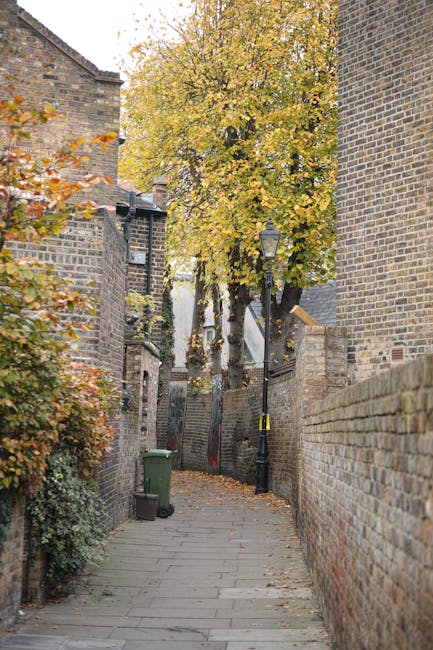






Narrow street rubbish collection Hackney access problems solved
Posted on 01/08/2026
Getting rubbish out of a tight Hackney street can feel like a small logistical battle. You've got parked cars, narrow terraces, awkward bends, and maybe a pile of bulky waste waiting by the front door while everyone in the building is trying to get on with the day. That is exactly where Narrow street rubbish collection Hackney access problems solved becomes more than a keyword - it becomes a real solution for homes, landlords, businesses, and builders who need waste gone without hassle.
In practice, the challenge is not just collecting rubbish. It is getting a truck close enough, keeping pedestrians safe, working around restrictions, and making sure the job is done properly the first time. This guide breaks down how access problems are handled, what good planning looks like, and how to avoid the usual delays, missed collections, and surprise costs. If you've ever stood in a side street at 7.30am wondering how on earth a sofa is meant to leave the building, you're in the right place.
For a broader look at the kinds of waste jobs available locally, you may also want to explore the full services overview and the main rubbish removal service in Hackney before you plan the collection.
Why Narrow street rubbish collection Hackney access problems solved Matters
Hackney has a lot going for it: dense housing, busy local high streets, converted buildings, mews-style access routes, and streets where one badly parked van can throw the whole day off. That mix is part of the area's character, but it also means rubbish collection needs more thought than a simple "turn up and lift" approach.
When access is tight, a collection can fail for reasons that seem minor but add up fast: the vehicle is too large, the road is blocked, the waste is left too far from the kerb, or the crew cannot safely load items without moving them through a narrow hallway or courtyard. Those problems cause delays, and delays can mean extra labour, rescheduling, or the waste sitting around longer than anyone wants. In other words, the right access plan saves time, money, and a fair bit of frustration.
This matters especially in streets where residents share limited frontage space, where commercial properties sit behind loading restrictions, or where builders have left mixed waste in a cramped side passage. For those situations, local experience counts. A team that understands Hackney access conditions can usually spot the likely bottleneck before they arrive, which is half the battle done.
Expert summary: The best rubbish collection in narrow Hackney streets is rarely about brute force. It is about planning the approach, measuring the load, timing the visit correctly, and choosing the right method for the road layout.
If your project is connected to a move, refurbishment, or business changeover, the issue becomes even more important. A poorly timed collection can interfere with handovers, tenant move-outs, or trade delivery windows. That's why many people read the local guides on E8 access tips and same-day rubbish removal delays before arranging a job in a tricky street.
How Narrow street rubbish collection Hackney access problems solved Works
The process usually starts before anyone picks up a single bag. A good collection provider will ask where the waste is located, how far it is from the road, what type of property you have, whether there are stairs or tight internal corners, and whether a larger vehicle can actually stop nearby. That early conversation is not admin for the sake of it. It determines the method.
In a narrow street, there are usually three workable approaches. The first is a small vehicle or van that can get closer to the property. The second is a larger vehicle parked at a sensible distance, with the crew carrying waste by hand to the load area. The third is a mixed approach: a smaller shuttle vehicle or a staged load-out, especially where there is no legal or safe way to stop right outside the building.
Good planning also includes timing. Early morning can be helpful where streets get crowded later, but it is not always ideal if residents need to be notified or if a building has strict access hours. Midday may give more traffic problems. Some jobs work better when arranged around local rhythms rather than simply chasing the earliest slot. Truth be told, a slightly later clean collection is often better than a rushed one that blocks the street and causes arguments with neighbours.
When the crew arrives, they will usually assess the site quickly. They look for turning room, kerb access, safe lifting space, and the easiest route from waste pile to vehicle. If the waste is in a basement, rear yard, or upper floor, they may adjust the team size or loading method. That flexibility is what solves a lot of access headaches.
For larger or mixed loads, choosing the right service matters too. Builders' waste, household clutter, garden cuttings, and office clearances each create different access demands. You can see the range of relevant services through builders waste disposal in Hackney, house clearance support, office clearance options, and garden waste removal.
Key Benefits and Practical Advantages
There are some obvious benefits, and some that people only notice afterwards. The obvious one is that the waste disappears. The less obvious one is that the whole job becomes calmer. Fewer awkward phone calls. Fewer missed appointments. Less standing in the rain trying to explain that the fridge is actually around the back and the gate sticks halfway open.
- Better vehicle positioning: The right setup reduces carrying distance and speeds up loading.
- Safer handling: Narrow routes require more care, especially with heavy or awkward items.
- Fewer delays: Planned access avoids repeat visits and last-minute changes.
- Less disruption to neighbours: Efficient collections minimise blocked pavements and noise.
- More accurate pricing: When access is understood upfront, quotes are usually more realistic.
- Reduced stress: You don't have to improvise on the morning of the collection.
There is also a practical value in using a team that understands how Hackney streets work in real life. Roads near terraces, schools, mixed-use buildings, and market areas can change character hour by hour. A collection arranged with that in mind tends to go smoothly, even if the street is busy and the space is tight.
And let's face it, once waste starts blocking a hallway or front step, people begin noticing it every time they pass. Solving access properly restores order quickly. That alone is worth a lot.
Who This Is For and When It Makes Sense
This kind of collection is useful for a wide mix of people. If you live on a narrow residential street, especially in a terrace, mews, or converted flat, you will probably recognise the problem immediately. The same goes for landlords clearing between tenancies, shop owners with limited loading space, and builders who have finished a small project in a tight access property.
It also makes sense when the items are bulky, bulky enough to be awkward but not so large that a full skip is necessary. Sofas, beds, white goods, broken desks, old shelving, garden waste sacks, and general household clear-out material are common examples. If the route from the property to the road is tight, the collection needs a proper access plan rather than a guess.
Some typical scenarios include:
- Residents in a terraced street with on-street parking on both sides.
- Flats above shops with no rear service yard.
- Builders clearing rubble or timber from a side passage.
- Offices in older buildings with narrow stairwells and limited loading time.
- House clearances where items must be moved through a shared entrance.
If you are buying, renting, or refurbishing in the area, it can also help to understand how access affects day-to-day life and property usability. Some readers find the local articles on acquiring properties in Hackney and what it is like living in Hackney helpful because they show how access issues show up in the real world, not just on paper.
Step-by-Step Guidance
If you want the process to go smoothly, the best approach is to prepare before collection day. Here's the plain version, without fluff.
- Identify every item to be collected. Group waste by type where possible: furniture, mixed household rubbish, garden waste, builders' debris, or office items.
- Measure the access route. Check gate widths, stair turns, hallway corners, and any tight external passage. A tape measure saves a lot of guesswork.
- Notice parking and stopping limitations. Can a vehicle pause safely nearby, or will the crew need to work from farther away?
- Take photos if the site is unusual. A few clear pictures often explain more than a long description.
- Be honest about obstacles. If there is a locked yard, low archway, or steep step, say so early.
- Confirm the timing window. Avoid arranging the job during peak congestion, school-run pressure, or building delivery times if you can help it.
- Prepare the waste in advance. Move smaller items together and keep walkways clear where safe to do so.
- Stay available on the day. If the crew has a question about access, a quick answer keeps the job moving.
That's the framework. Simple, but not simplistic. A collection is much more likely to succeed when the access route has been thought through like a person actually lives there, because of course they do.
If you want to compare service styles, the broader waste clearance service can be useful for mixed loads, while the local guide to bulky rubbish collection routes near Victoria Park gives a good sense of how area layout changes the approach.
Expert Tips for Better Results
Here is where a bit of real-world know-how helps. The first tip is not to focus only on the front door. In many Hackney properties, the back route is better, but not always. Rear access can look promising and then turn into a squeeze with a locked gate, broken latch, or nowhere to turn a trolley. Check both ends if you can.
Second, think in terms of carrying distance. People often say, "It's only down the road," but if the road is double-parked or the waste has to be moved by hand through two stairwells, that "only" turns into a proper workout. Access charges and crew size are often based on that reality, not the postcode on its own.
Third, keep fragile or hazardous items separate. Sharp metal, broken glass, paint tins, and anything that could leak should be flagged early. Even when a collection can take mixed waste, it still needs to be sorted safely. That protects the crew and keeps the job more efficient.
Fourth, if your collection is tied to a move-out or refurbishment, leave a small buffer. One spare day can save you if the road is full, the lift is out, or a neighbour has left a van in exactly the wrong place. Mildly annoying, yes. But manageable.
A quick aside: the best access plan is usually the boring one. No drama, no heroics, no carrying a wardrobe at a strange angle while everyone on the street watches. Boring is good here.

Common Mistakes to Avoid
Most access problems are avoidable, which is the slightly annoying part. You only discover that after a bad collection. Here are the common mistakes that tend to cause trouble.
- Assuming the vehicle can reach the door. Not every street allows that, and not every vehicle is suitable.
- Giving vague descriptions. "A bit of rubbish" does not help much when there are three wardrobes and a mattress involved.
- Ignoring parking restrictions. A beautiful plan falls apart if the only stopping point is not legal or safe.
- Forgetting about staircases and turns. A sofa that fits in a room may still refuse to come back out. It happens all the time.
- Leaving everything for the collection day. Pre-sorting waste reduces confusion and speed bumps.
- Underestimating the time needed. Tight access always takes longer than an open forecourt.
There is also a pricing mistake worth mentioning. Some people choose a provider only because the initial quote looks low, then discover the access challenge was not fully priced in. That can lead to add-ons, rescheduling, or a frustrating conversation on the doorstep. A better quote is usually the one that reflects the site honestly from the start. For more detail on that side of things, the local guide on hidden costs in Hackney waste removal is worth a look.
Tools, Resources and Recommendations
You do not need specialist equipment to prepare for a collection, but a few simple tools make a difference. A tape measure, phone camera, torch, gloves, and a notepad are usually enough for most households. For businesses and builders, a short access sheet or job note can also be helpful.
| Tool or resource | What it helps with | Best used by |
|---|---|---|
| Tape measure | Checking gate widths, stair turns, and doorway clearances | Homeowners, landlords, contractors |
| Phone photos | Showing route constraints and item volume | Anyone arranging a collection |
| Gloves and bags | Keeping loose waste contained and easier to move | Households, offices, gardens |
| Access notes | Recording parking, gates, loading points, and hazards | Property managers, builders, business owners |
| Service comparison | Matching the right removal type to the waste type | Anyone with mixed or bulky waste |
For a more rounded understanding of what a provider can handle, it helps to review the local services page and the practical guidance on recycling and sustainability. If your job involves sensitive building or workplace access, the page on insurance and safety is also a sensible read.
And if you are planning ahead for a clearance around a move, tenancy change, or business refit, the site's about us and pricing and quotes pages can help you understand how the process is usually handled.
Law, Compliance, Standards, or Best Practice
Any rubbish collection in a narrow street needs to respect basic safety and site rules. In the UK, that generally means avoiding unsafe lifting, keeping paths clear where possible, not obstructing emergency access, and handling waste in line with normal duty-of-care expectations. The details will vary by property type and load type, but the principle stays the same: if the access route is unsafe, it needs to be changed or the job needs to be done differently.
For business customers, that often includes extra care around staff movement, customer access, and loading near shared entrances. For residential customers, it usually means keeping the pavement usable, protecting walls or bannisters where needed, and not overloading one person with awkward items. A good team should be comfortable making sensible adjustments rather than forcing the issue.
Waste segregation also matters. Mixed waste may be acceptable for collection, but hazardous or specialist items should be identified before the visit. If you are not sure what category an item falls into, it is better to ask early than to leave it until loading time. That small conversation can prevent a messy delay.
Best practice also includes honest communication about access. If a street is especially tight, if there is no legal stopping place, or if the collection point is more than a short carry away, say so. That allows the provider to plan the right vehicle and crew. No one wins by pretending the access is easier than it really is.
Options, Methods, or Comparison Table
Not every collection is handled the same way. Here is a simple comparison of the main options people usually consider when access is difficult.
| Method | Best for | Access advantage | Possible drawback |
|---|---|---|---|
| Small van collection | Narrow streets, short stops, lighter mixed waste | Can get into tighter spaces | May require more trips for larger loads |
| Standard truck collection | Moderate access with clearer stopping space | Efficient for larger volumes | May struggle on very tight roads |
| Hand-loaded carry-out | Flats, rear yards, basement clearances | Works when vehicles cannot stop at the door | More labour and longer collection time |
| Staged or split collection | Very tight access or mixed access points | Flexible and practical | Needs careful coordination |
The right method depends on the property, the waste type, and how far the crew must carry items. In some cases, a small van with a hand-load approach is the smartest choice. In others, a larger vehicle parked a little farther away is cheaper and quicker overall. There isn't one perfect answer. Annoying, but true.
Case Study or Real-World Example
Here's a realistic example. A landlord in a narrow Hackney terrace needs a one-bedroom flat cleared after a tenancy ends. The building has a front entrance, a shared internal stair, and no usable rear access. On the road, parking is tight and there is usually a car tucked right outside the property by 9am.
Instead of booking the collection blind, the landlord sends photos of the hallway, the front step, and the waste pile. The provider spots that the main issue is not the amount of waste, but the awkward carry route and the likely parking conflict. A smaller vehicle is planned, the collection is booked earlier in the day, and the waste is grouped near the entrance the night before. Nothing fancy.
On the day, the crew arrives, sees the parked car, and uses the shorter route to load from just around the corner. It takes longer than a suburban driveway job, of course, but the collection still completes without fuss. The key point is simple: the access issue was solved before it became a problem.
That kind of approach also works for small office moves, shop refits, and garden clearances in dense streets. The details vary, but the principle is the same - prepare the route, not just the rubbish.
Practical Checklist
Use this checklist the day before your collection. It keeps things tidy and avoids those annoying "we should have measured that" moments.
- Have you listed every item or waste bag to be removed?
- Have you checked the narrowest point on the access route?
- Are any gates, locks, or rear passages likely to cause delay?
- Have you noted parking restrictions or loading limits?
- Have you taken a few clear photos of the route and waste?
- Have fragile, sharp, or awkward items been flagged?
- Is the waste placed in a safe, accessible spot where possible?
- Do all occupants or staff know the collection time?
- Have you allowed a bit of extra time for tight access?
- Have you chosen a service type that matches the waste and the site?
If you can tick most of those off, you are in good shape. Really, that's most of the job.
Get a free quote today and see how much you can save.
Conclusion
Narrow streets do not have to mean difficult rubbish collection. With the right planning, the right vehicle, and an honest look at the access route, even awkward Hackney jobs can run smoothly. The trick is to treat access as part of the job, not an afterthought. Once that mindset clicks, everything becomes easier: quotes are clearer, collections are faster, and there is far less stress on the day.
If your property, business, or project sits on a tight street, you now know what to check, what to ask, and what to avoid. That's a good place to be. And frankly, when the rubbish is gone and the pavement is clear, the whole street feels better too.
For anyone still weighing up the options, the most useful next step is usually a simple one: gather a few photos, note the access constraints, and compare the right kind of collection for your site. Small prep, big difference. That's the whole game.